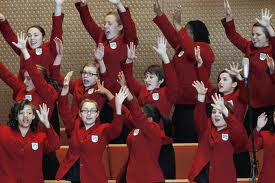
I know I'm late in jumping on the "Glee" bandwagon, but, thanks Netflix, my wife and I have been making our way through Season 1 this summer (I think we're through eight episodes so far).
|
I've moved! For the latest blog updates, go to http://christiancoon.tumblr.com/. For my posts from 2007-2009, check out www.genxrev.com.
I know I'm late in jumping on the "Glee" bandwagon, but, thanks Netflix, my wife and I have been making our way through Season 1 this summer (I think we're through eight episodes so far).
|
There are long to-do lists when starting a new church, but some of the instructions are quite simple. One of the first "rules" is this: Join stuff.
I must confess I've never been a big joiner, but if you want to meet people and let them know about this new church you're helping to start, you've got to be a part of groups. So I started joining all kinds of groups, including a running club. Even though I've been a runner most of my life, I've never joined a running club preferring, instead, to be solitary when putting in my miles. But I showed up one Wednesday morning at 6 a.m. and stuck with it. It wasn't easy. People already knew one another so I felt like an outcast initially, but I kept showing up and people eventually started talking and getting to know me. Last summer, I started in with the group again, but a few weeks into it, I had some changes to my schedule and I couldn't go for a few weeks. Then we went on vacation. And then it just felt awkward to go back. Would they remember me? It was easier just to go back to my solitary running ways.
How similar this is to our faith lives! We get into the groove of prayer, worship, community connection, but something throws us off and other things take priority and we start wondering whether God or a church would even want us back or remember us. Frankly, we'd rather bypass the awkwardness and just put our faith on hold.
Which is why the story of the Prodigal Son (Luke 15:11-32)--as familiar as it may be to some--is always a great passage to read and reflect on. A wayward son insults his father, leaves home, falls on hard luck, debates a return, and comes home. And when he does, there are no questions from the father and, as far as I can tell, not much awkwardness. There is only embrace.
If you wonder whether you can ever return to faith or church, read that story. And hear God's resounding answer: Yes. Always.
Our son is at the age where everything seems to take fooorrrreeeevvvver. When he asks how long he has to wait for something he'd rather not be waiting for and I tell him, for example, "Oh, 15 minutes," he'll reply, "How many times do I have to count to 60?" Kindergartners know their seconds and minutes.
I always find it interesting that time seemingly stands still for children and yet rushes by for adults. Over and over we hear (and experience) the challenge of trying to fit everything into the 24 hours we've been given. Lately, though, I've been helped by the experience of counting to 60. It's amazing what can happen.
When I close my eyes and count to 60, I can take 10 really deep breaths, which slows me down and reminds me of the nearness of God's breath.
When I count to 60, I can bring forth a wonderful memory of one of our favorite places to go in the summer (Pentwater, Michigan) and hear the waves rush to the shore.
When I count to 60, I can replay in my head a wonderful song I just downloaded ("The 23rd Psalm" by Bobby McFerrin).
When I count to 60, I can make a good start on a list of things for which I'm grateful.
When I count to 60, I can reflect on an issue that is important to me (like ending hunger).
That's five minutes. After only five minutes, I've experienced a pretty great prayer. What can you come up with if you stop, close your eyes, take deep breaths, and count to 60? Even if you only do it once, I believe you may begin to see time not as something you wrestle with, but something you receive as God's gift. |


Somewhere in this world, there is a drawer and in this drawer, there are probably at least 15 pairs of sunglasses that I have lost over the years. Cheap glasses and slightly-more-than-cheap sunglasses. I know not to invest in an expensive pair anymore because I usually have them a year or so. Normally it doesn't bother me, but I really kind of liked the pair I lost a couple weeks ago so I've had to reflect more on the spiritual practice of indifference.
I've been reading about Ignatius of Loyola, an early 16th-century priest and theologian who is the spiritual father of the Jesuits. Indifference, for Ignatius, doesn't mean you have no feelings for anything, but instead means "the freedom to approach each decision afresh. The ability to be detached from one's initial biases and to step back, the willingness to carefully balance the alternatives. An openness to the working of God in one's life." (from "The Jesuit Guide to (Almost) Everything," a book I've been quoting liberally from lately). That's obviously easier said than done. It's difficult to go into a decision or situation and check our biases at the door. I can say to myself, if I find my sunglasses, wonderful and if I don't, that's still OK. But the small and inconsequential pang of that loss still lingers even when it's something as superficial as sunglasses. There are times when things will go well in my life and times when they won't. But because my meaning in life doesn't stem from sunglasses or anything else but rather because I'm deeply loved by God, it's a bit easier to let things go. But I'll still won't mind if those sunglasses show up. |
My wife and have a long-standing joke that she gets asked this question by strangers at least once a month. We're not exactly sure what it is, but she has a face/persona that invites these inquiries.
I had the opportunity to make one of those inquiries yesterday. I was having coffee with Joel Balasingham at Cafe Too in Uptown and as soon as I walked in I saw a woman who looked unbelievably familiar. I couldn't stop sneaking glances her way, racking my brain and trying to figure it out. I thought maybe I went to journalism school to her, but I wasn't sure. Of course, what I should have done was go up to her, apologize for interrupting, and just asked, haven't we met before? What's the worst that could have happened? She might have laughed and rolled her eyes and I would have been embarrassed for a few seconds, but at least I would have known. But I convinced myself that I didn't know her so I didn't do anything. Trey will be preaching about Jesus talking to strangers this Sunday and I underestimate just how much courage it takes to go up to people you don't know or don't know well and say hello. It takes a lot of vulnerability and you risk being rejected or embarrassed. I confess I don't take those chances often enough. But when I do, amazing things can happen. Sometimes friendships begin. Other times, I find an issue we have in common and perhaps we can start working on something together. Of course, sometimes nothing happens that I'm aware of, but if I trust that the Holy Spirit is actively working in the world, perhaps something is taking place. Many of us can feel disconnected in this big city, but this week pray for the courage to take a risk, maybe make a bit of a fool of yourself, say hello to a stranger and you might build a friendship in the process. |

Is it possible to summarize the death of Osama bin Laden in 140 characters? Many people have tried in the last couple of days, some more successful than others. One article I found interesting highlighted research done byOpenBible.info's Stephen Smith in which he cataloged the top tweeted Bible verses 12 hours after the announcement of bin Laden's death. It's quite a list and includes Rick Warren's choice from Proverbs: "When justice is done, it brings joy to the righteous but terror to evildoers" (this was #3). The number one verse, however, was also from Proverbs and gives a different take: "Do not gloat when your enemy falls; when they stumble, do not let your heart rejoice." The first verse is from Proverbs 21, the second from Proverbs 24. These passages encapsulate my own emotions as I watched Sunday night. Relief and--maybe if I'm honest with myself--joy at first, but those emotions eventually turned to deeper reflections on the biblical nature of justice and how we define and respond to our own "enemies." I mentioned a few weeks ago that I'm in the midst of reading a psalm a day and so far (I'm through 38) almost every psalm makes some sort of mention of having enemies and many express a desire for these enemies to perish. That's a very human desire, one that the psalms express nakedly. Of course, followers of Jesus also trip up over his command for us to love our enemies. Does that command have limits? Do we need to expand or redefine "love"? I wrestle with all these questions and emotions and wonder what the "proper" way to respond is. And I find myself realizing that 140 characters are probably too many. Instead, I go before God, not saying a word, and listen for wisdom and peace.
|